Drywall Finish Levels Explained

Drywall finish levels are a real industry standard, not marketing language. Levels 0 through 5 describe exactly how much taping and coating a surface has received, and they exist so a specification can say what a wall should look like without ambiguity. Knowing them is useful for two reasons: you can ask a contractor what is actually included in a quote, and you can stop over-finishing surfaces that nobody will ever see.
The six levels
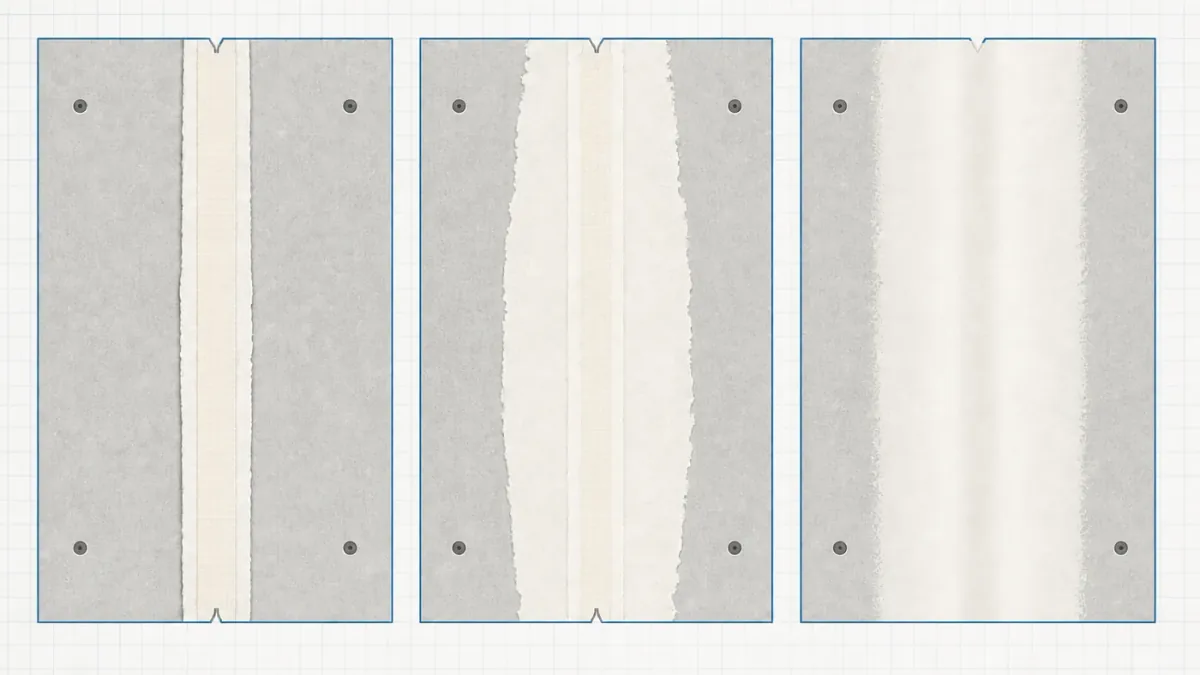
- Level 0: board hung, nothing else. Used for temporary construction and for surfaces where the final treatment is undecided.
- Level 1: tape embedded in compound at all joints and interior angles. Tool marks and ridges are acceptable. Common above ceilings in plenum spaces and in concealed areas.
- Level 2: one coat over the tape, plus fasteners covered. The standard behind tile and in garages and workshops where appearance is not the point.
- Level 3: two coats. Suitable under heavy textures and heavy wall coverings, never under flat or gloss paint.
- Level 4: three coats, all tool marks and ridges removed. This is the residential default for painted walls and light textures.
- Level 5: a thin skim coat over the entire surface on top of level 4. Required under gloss and semi-gloss paint, and wherever strong side lighting will cross the wall.
If a quote does not say which level is included, assume level 4 and ask. The gap between level 4 and level 5 is a real amount of labor and money, and it is the single most common source of expectation mismatch on a drywall job.
Which level does your room need?
The deciding factors are the paint sheen and the lighting, not the room's importance. A flat-painted bedroom wall with no side light hides a great deal. A hallway wall with a window at one end shows everything.
- Flat or matte paint, normal lighting: level 4 is fine.
- Eggshell or satin: level 4 done carefully, or level 5 if the wall is long and well lit.
- Semi-gloss or gloss: level 5. Gloss paint is effectively a mirror for surface defects.
- Any wall or ceiling that takes raking daylight from a window or a wall washer: level 5.
- Behind tile: level 2 is enough, and a smoother finish is wasted under thinset.
- Garage, utility room, unfinished basement: level 2 is a reasonable, code-satisfying stopping point where no rating requires more.
What a level 5 finish actually involves
A level 5 skim is a thin, continuous layer of compound applied over the whole surface, not just the joints. Its purpose is to equalize the texture and porosity of the wall so that paper, compound and joints all absorb paint identically.
- Complete a proper level 4 finish first. A skim coat hides texture differences, not bad joints.
- Thin all-purpose compound to a spreadable consistency, or use a purpose-made skimming compound.
- Apply with a wide knife, a skimming blade or a roller-and-scrape method, then flatten immediately.
- Sand very lightly, mainly to remove edges and picks rather than to shape anything.
- Prime with a good drywall primer. Even after skimming, primer is doing real work here.
A high-build drywall primer-surfacer is sometimes offered as a level 5 substitute. It helps, and it is better than nothing, but it is not equivalent to a compound skim on a wall that will be lit from the side.
What each level costs
Finishing labor, not board, dominates a drywall price. Roughly, if a level 4 finish is your baseline:
- Level 2 saves perhaps 25% to 35% of the finishing labor.
- Level 4 is the baseline most quotes assume, commonly $1.20 to $2.50 per square foot to hang and finish.
- Level 5 adds roughly 20% to 30% on top of the finishing labor, and more on a large ceiling.
- Materials barely move: the extra compound for a skim coat is a small fraction of the added labor.
That asymmetry is worth planning around. Specifying level 5 only where the lighting demands it, and level 2 in the garage, can take a meaningful amount off a whole-house number without any visible compromise.
Drywall Cost Calculator
Price finish levels by adjusting the labor rate per square foot.
Frequently asked questions
Primary references
Manufacturer and industry guidance used to check this article.
- Application and Finishing of Gypsum Panel Products, GA-216-2010 archiveGypsum Association
- Gypsum panel and joint treatment FAQsUSG
Product instructions, tested assemblies and local code take priority over general guidance.