Drywall Calculator
Enter your room length, width and wall height to get the number of drywall sheets you need, plus joint compound, tape, screws and an optional cost estimate. Everything recalculates as you type.
- Free, no sign-up
- Feet, inches or metric
- 10% waste included
- Inputs stay private

Your estimate
4' x 8' sheets · 10% waste allowance4' x 8' drywall
Area
Materials
Quantities include a 10% waste allowance and standard deductions of 21 sq ft per door, 15 sq ft per window and 112 sq ft per garage door. The sheet count comes from laying the board out wall by wall, plus 10% as spare sheets. Round up when in doubt, an extra sheet costs less than a second trip.
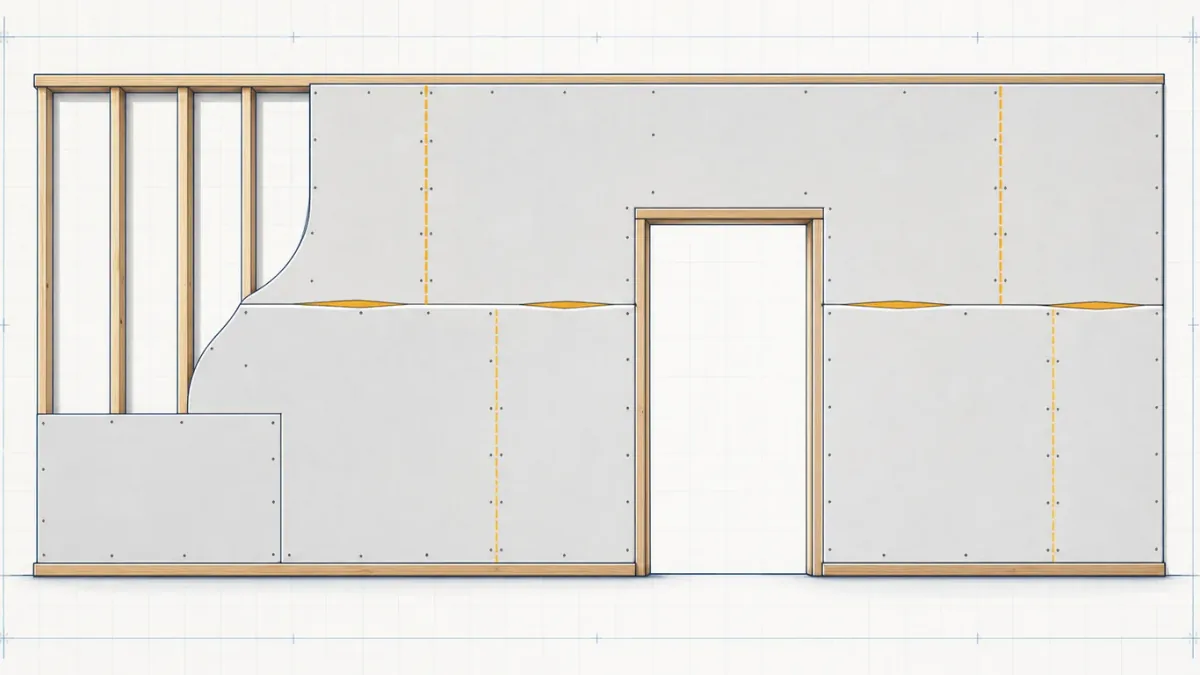
A drywall calculator turns room measurements into a shopping list. Give it a length, a width and a wall height, and it works out how much surface area you have to cover, converts that area into full sheets of drywall, then sizes the joint compound, tape and screws that go with them. This one deducts standard door and window openings, lays the board out wall by wall the way a hanger would, and adds 10% as spare sheets by default, so the sheet count is what you will actually buy.
What this drywall calculator works out
Hanging drywall is one of the few remodeling jobs where a five minute estimate saves a whole afternoon. Buy too little and you make a second trip for one sheet. Buy too much and you are storing 60 pound panels in a garage until they warp. The calculator above closes that gap by reporting every quantity you have to put in a cart, not just the board count.
- Gross wall area, the openings you deduct, and the net area left to cover
- Ceiling area when you tick the ceiling option
- Sheets required for 4x8, 4x9, 4x10 or 4x12 board, always rounded up
- Joint compound in pounds and in 4.5 gallon boxes
- Joint tape in linear feet and in 250 foot rolls
- Drywall screws as a count and as an approximate weight
- An optional cost total once you enter a price per sheet
Nothing is sent to a server. The math runs in your browser, which is why the results update on every keystroke and still work if your phone loses signal in a basement.
The drywall formula, step by step
Every drywall takeoff, from a closet to a whole floor, is the same five steps. The calculator does them in order, and you can reproduce them on paper to check any result.
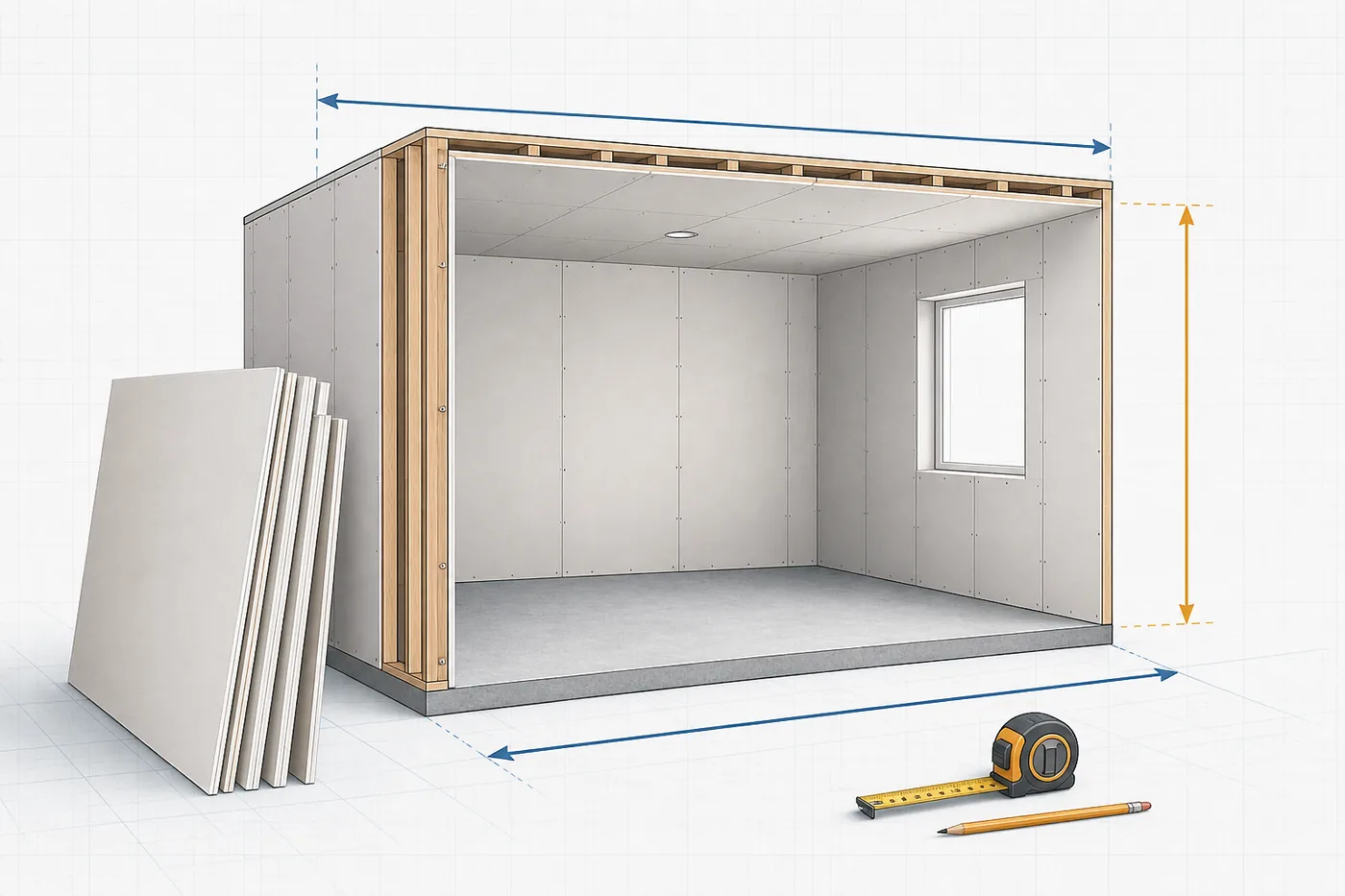
- Perimeter = 2 x (length + width). This is the distance around the room at floor level.
- Gross wall area = perimeter x wall height.
- Deduct openings. Subtract 21 sq ft for each door and 15 sq ft for each window to get net wall area.
- Add the ceiling if you are boarding it. Ceiling area = length x width.
- Sheets: lay the board out wall by wall, reusing offcuts and ripped strips, then add 10% as spare sheets, rounded up. As a floor, the count is never below total area x 1.10 divided by the area of one sheet.
The 10% is the waste allowance. Applied to area, it covers cutting around outlets, trimming sheets to fit a wall that is not an exact multiple of four feet, and the occasional broken corner. The layout already accounts for the offcuts, so there the same 10% becomes spare sheets for breakage and miscuts. Ten percent is the standard allowance for a straightforward rectangular room; you can raise it in the calculator when the job has more cuts than usual.
Sheet areas: a 4x8 sheet is 32 sq ft, a 4x9 is 36 sq ft, a 4x10 is 40 sq ft and a 4x12 is 48 sq ft. Divide your total square footage by one of those numbers and you have the sheet count.
A worked example: a 14 by 12 foot bedroom
Take a bedroom that measures 14 ft by 12 ft with 8 ft ceilings, one door and two windows, boarded on the walls only with 4x8 sheets. Here is the whole calculation.
- Perimeter: 2 x (14 + 12) = 52 ft.
- Gross wall area: 52 x 8 = 416 sq ft.
- Openings: one door at 21 sq ft plus two windows at 15 sq ft each = 51 sq ft.
- Net wall area: 416 - 51 = 365 sq ft.
- With 10% waste: 365 x 1.10 = 401.5 sq ft.
- Sheets by area: 401.5 divided by 32 = 12.55, which rounds up to 13 sheets.
- Sheets by layout: the four walls take 13 sheets of 4x8 with the offcuts reused, plus 2 spares (10% of 13, rounded up), so the calculator says 15.
Finishing materials follow from the board you hang, not the raw wall area, because you tape every joint on every sheet you put up. The spares are left out, since an unbroken spare goes back to the store. Thirteen 4x8 sheets is 416 sq ft of board. At 140 lb of all-purpose compound per 1,000 sq ft that is roughly 58 lb, or one 4.5 gallon box. At 370 linear feet of tape per 1,000 sq ft that is about 154 ft, so one 250 ft roll covers it. Screws run about one per square foot on walls, so plan on roughly 365 screws, call it a 2 lb box.
Switch the sheet size to 4x12 and the same room needs 401.5 divided by 48, which is 8.36, so 9 sheets by area. The layout also comes to 9, and with one spare the calculator says 10. Fewer, larger sheets mean fewer butt joints to tape, which is why professional hangers reach for 12 foot board when the walls are long enough and there is room to carry it in.
Taller walls are where the layout earns its keep. A 12 by 12 room with 9 ft walls and no openings has 432 sq ft of wall, 475 sq ft with waste, which divides into 15 sheets of 4x8. But a 9 ft wall takes three rows of board, two full rows and a 1 ft strip. The full rows take 12 sheets and the strips for all four walls come out of 2 more, 14 in all, so with 2 spares the calculator says 16. In 4x12 board the same room lays out in 9 sheets, because one sheet ripped into four 1 ft strips covers the bottom of every wall, and the count is 10 with a spare.
Which drywall sheet size should you pick?
Sheet length is a trade-off between handling and finishing. Every extra joint is a joint you have to tape, coat three times, sand and prime, so longer sheets mean less finishing work but heavier lifts.
- 4x8: the DIY default. Fits in a pickup or on a roof rack, one person can wrestle it, and it suits 8 ft walls with no horizontal seam.
- 4x9: for the 9 ft walls common in newer builds, again with no horizontal seam.
- 4x10: a good balance on longer walls, and it keeps butt joints away from the middle of the room.
- 4x12: fewest joints and the fastest finish, but a 4x12 half inch sheet weighs about 82 lb and needs two people plus a clear path.
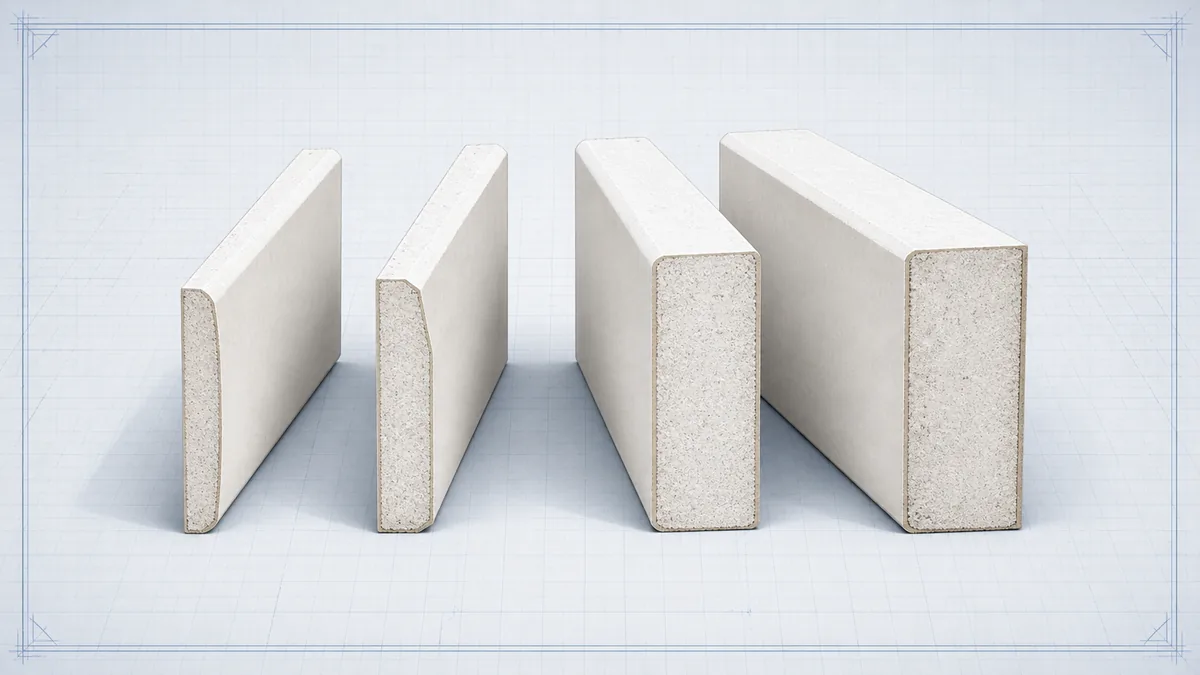
Thickness is a separate decision from size. Half inch board is standard for walls, five eighths inch is used for ceilings and for fire rated assemblies between a garage and living space, and quarter inch is a flexible skim board for curves. The calculator counts sheets, so it works the same whichever thickness you buy.
How much mud, tape and screws you need
These are the rules of thumb behind the materials section of the results card. They are conservative, which is what you want when the alternative is running out of mud with one wall left.
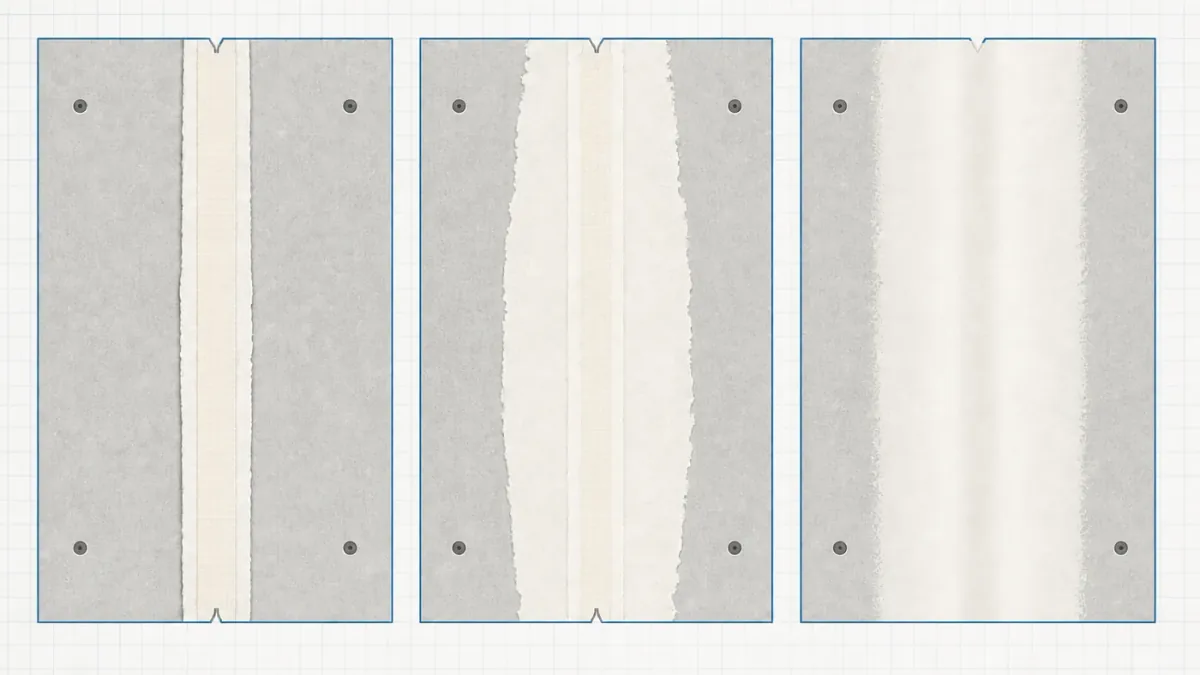
- Joint compound: about 140 lb per 1,000 sq ft of board for taping plus two finish coats. A 4.5 gallon box holds roughly 61.7 lb.
- Joint tape: about 370 linear feet per 1,000 sq ft of board. Standard rolls are 250 ft or 500 ft.
- Screws: the calculator uses a purchasing allowance of roughly one per square foot on walls. Actual fastener spacing must follow the board manufacturer, local code and any tested assembly instructions.
- Ceilings need tighter spacing, so the calculator uses 1.25 screws per square foot for ceiling area.
- Corner bead is measured separately: one length per outside corner, floor to ceiling.
If you are using setting-type compound for the tape coat and all-purpose for the finish coats, split the total roughly 40/60 between the two. Lightweight all-purpose sands more easily and is the usual choice for the final pass.
Five tips for an accurate takeoff
- Measure each wall separately when the room is not a clean rectangle, then add the areas. A perimeter formula assumes four square walls.
- Do not deduct small openings. Outlets, switches and vents come out of your waste allowance, and cutting around them is the reason the allowance exists.
- Deduct large openings honestly. A wide cased opening or a set of patio doors is worth measuring rather than counting as one standard door.
- Raise the waste factor to 15% for rooms with lots of angles, a stairwell, or many small closets, where offcuts are hard to reuse.
- Order full bundles where you can. Suppliers price by the sheet but deliver in pairs, and an extra sheet on site is cheaper than a delivery fee.
One more habit worth keeping: write your numbers down before you go to the store. Having the square footage, the sheet count and the mud quantity on your phone makes it much easier to answer the questions at the pro desk, and it stops you from guessing at the one number you forgot to check.