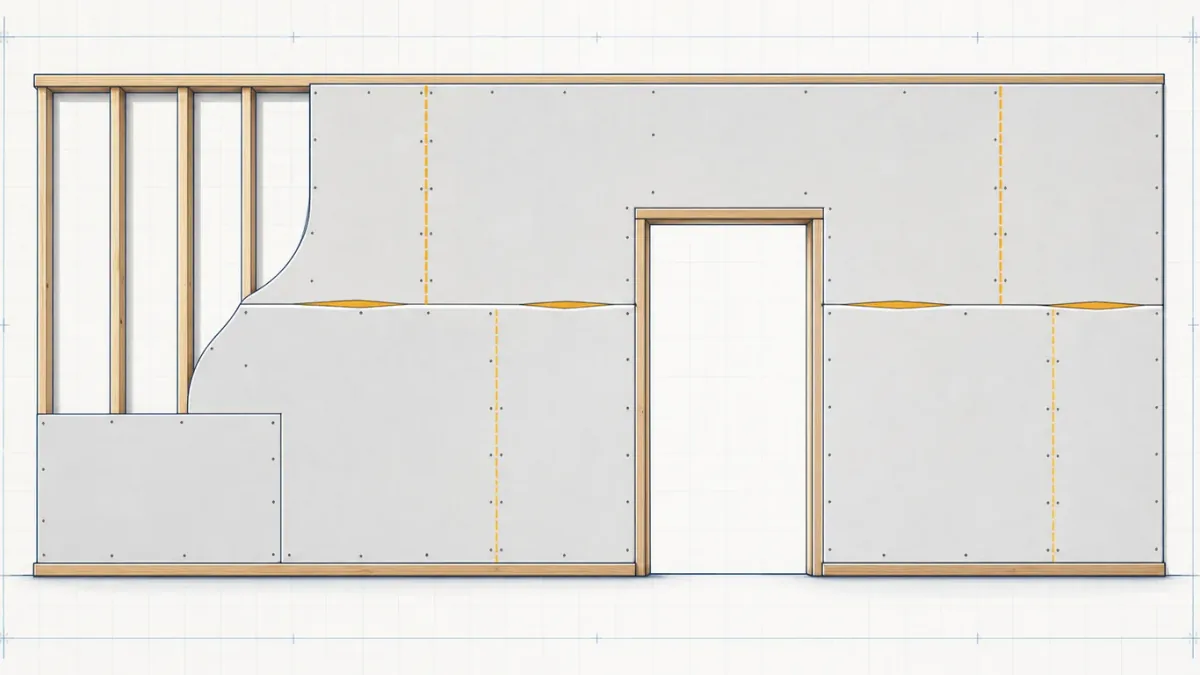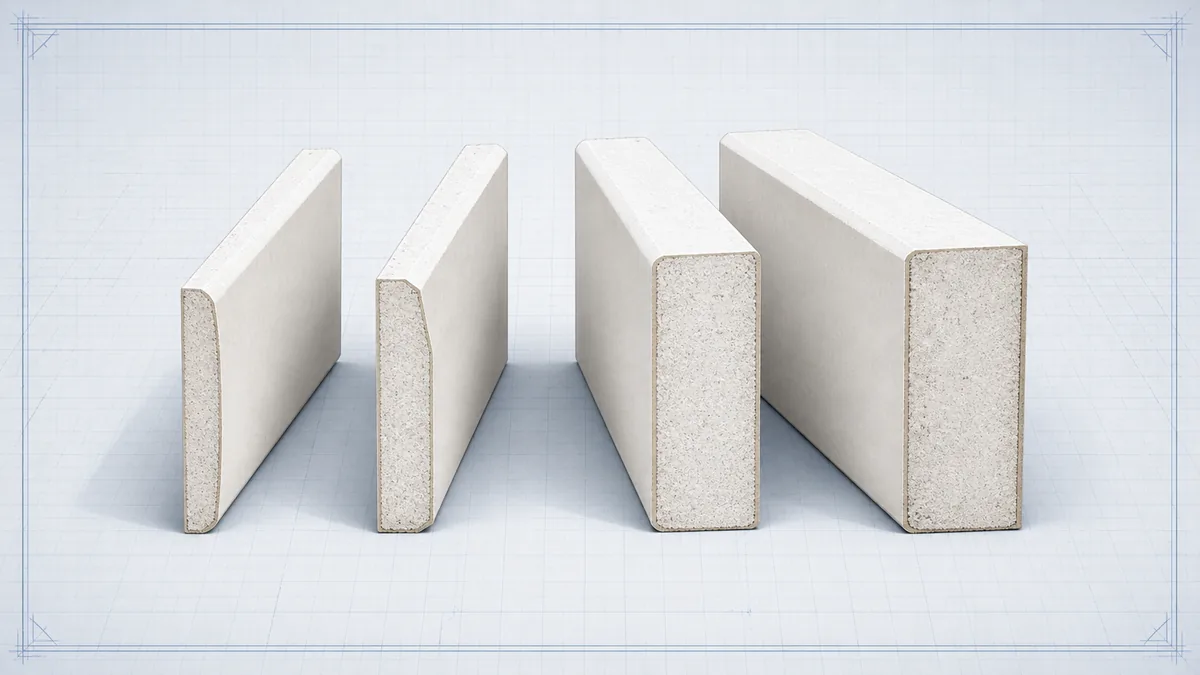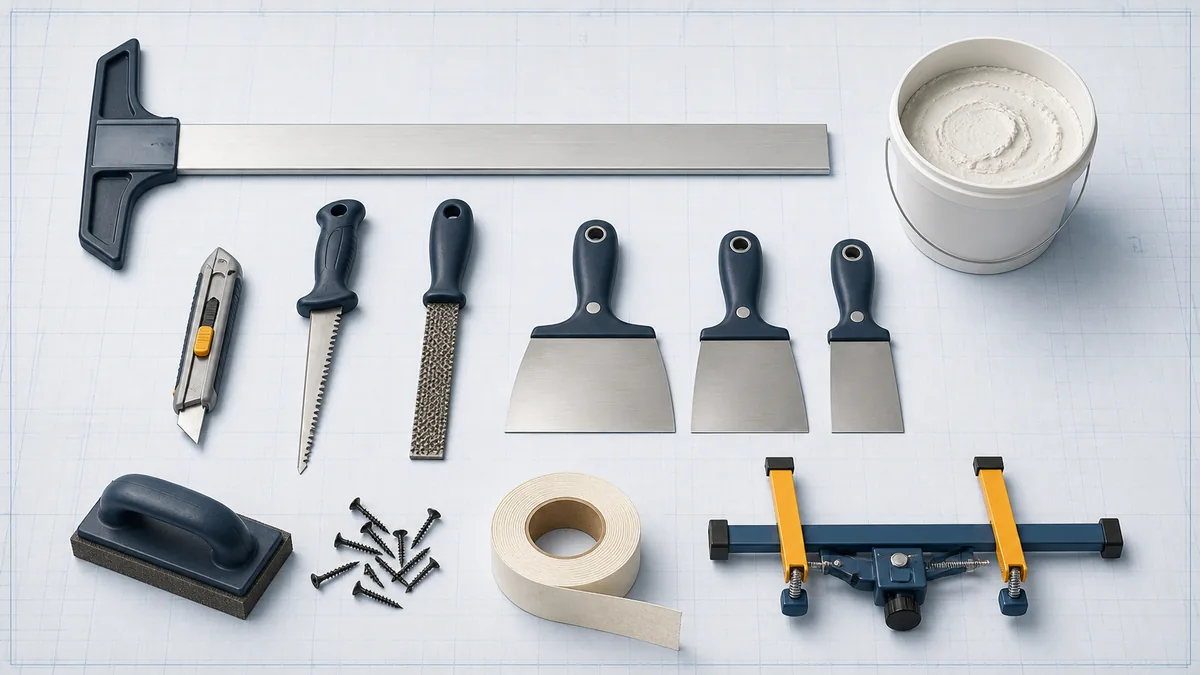
Screw spacing is one of the few drywall numbers that is genuinely prescriptive: codes and manufacturer instructions state maximum spacings, and rated assemblies are tested at specific patterns. It is also one of the most commonly overdone jobs on site, because more screws feels safer than fewer. It usually is not. This guide covers the standard spacings, how many screws a sheet actually needs, and why fastener depth matters more than fastener count.
Standard spacings
- Walls, screws only: up to about 16 in on center is common for a non-fire-rated single-layer installation. Follow the panel and assembly instructions if they require a tighter pattern.
- Ceilings, screws only: about 12 in on center throughout. Overhead board carries its own weight, so it gets more fasteners.
- Edges: keep fasteners 3/8 in back from the sheet edge. Closer than that and the head breaks out the edge.
- Never fasten within about 12 in of a corner on the ceiling side of a wall-to-ceiling joint, where movement concentrates; floating that corner reduces cracking.
- Rated assemblies: follow the tested listing exactly. Fastener spacing is part of what earns the rating.
These are typical figures. Your local code and the board manufacturer's printed instructions govern, and where they differ, the stricter one wins. Check before you fasten a rated assembly.
How many screws per sheet?
Working from the spacings above on framing at 16 in on center, the arithmetic lands at these familiar numbers:
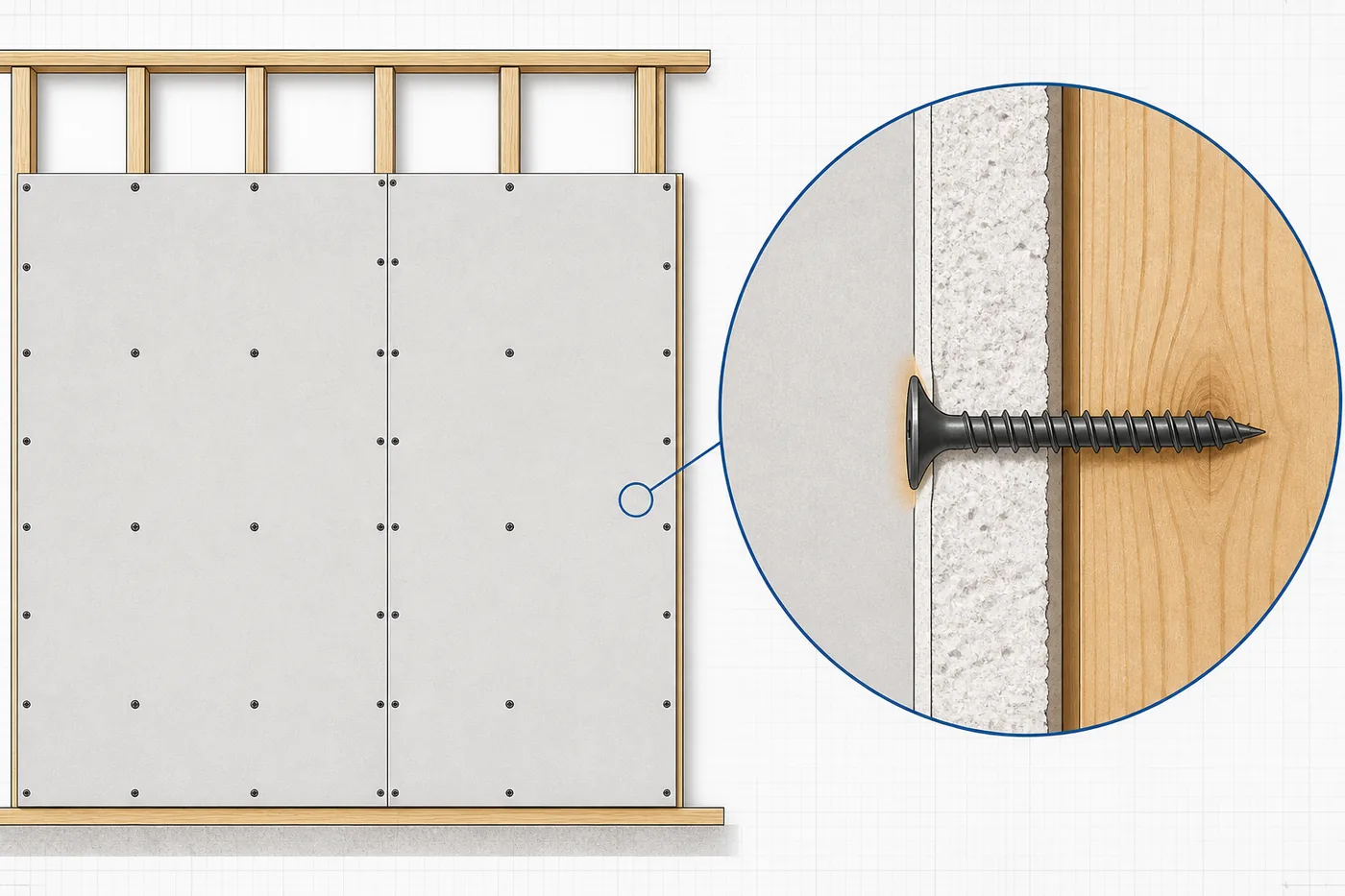
- A 4x8 sheet on a wall: 28 screws in the pattern at 16 in on center; buy about 32, roughly one per square foot.
- A 4x8 sheet on a ceiling: 35 screws in the pattern; buy about 40, roughly 1.25 per square foot.
- A 4x12 sheet on a wall: about 48 screws.
- A 4x12 sheet on a ceiling: about 60 screws.
By weight, drywall screws run around 320 per pound for 1-1/4 in coarse thread, so a 1 lb box covers roughly ten 4x8 wall sheets. Our calculator reports both a count and an approximate weight, using one screw per square foot on walls and 1.25 on ceilings, so the number tracks whichever surfaces you have selected.
Buy 10% to 15% more than the calculation says. Screws that miss a stud get pulled and replaced, some strip, and the last thing you want at 6pm is to be nine screws short.
Depth is what actually matters
A drywall screw holds through the head bearing on intact face paper. Drive it too deep and the head tears through, at which point the fastener is doing almost nothing and you have a crater to fill. Overdriving is far more common than underdriving, and it is the reason fastener pops appear a year later.
- Target: the head just below the surface, sitting in a dimple you can feel with a taping knife but that has not broken the paper.
- Use a screw gun with an adjustable depth nose, or set a drill clutch on an offcut before starting.
- Slow down on the last quarter turn. Speed is what punches heads through paper.
- A screw that spins without biting has missed the stud or stripped the wood. Remove it; do not leave it in place.
- Lightweight board is softer at the face. If you switch board types mid-job, re-check your depth setting.
Adding extra screws does not compensate for badly set ones. Twenty screws set correctly hold a sheet better than forty driven through the paper, and give you half as many dimples to fill.
Screws, nails and adhesive
Nails are still permitted in many jurisdictions and you will find them throughout older houses, but almost nobody chooses them for new work.
- Screws hold better in withdrawal, so they resist the popping that ring-shank nails eventually show as framing dries and moves.
- Screws can be backed out and reset. A misdriven nail damages the board coming out.
- Screws need no hammer blows, which means no chance of fracturing the core around the fastener.
- Construction adhesive on the stud faces, combined with a reduced screw pattern, is a recognized method that cuts fastener count and reduces pops. Follow the adhesive manufacturer instructions for the permitted spacing.
- Use coarse-thread screws in wood framing and fine-thread in steel studs. The wrong thread either strips the wood or refuses to bite the steel.
Whatever you use, the failure mode to design against is movement. Framing shrinks as it dries, and a fastener that only just held on day one is the one that shows through your paint next winter.
Walls and Ceiling Calculator
Screw counts split by surface, with ceiling density applied.
Frequently asked questions
Primary references
Manufacturer and industry guidance used to check this article.
- Sheetrock Brand Installation and Finishing GuideUSG
- Application and Finishing of Gypsum Panel Products, GA-216-2010 archiveGypsum Association
Product instructions, tested assemblies and local code take priority over general guidance.