Drywall repair is sized by the hole. A nail hole needs a swipe of compound. A doorknob hole needs a patch with something behind it. A hole bigger than your hand needs a piece of board and a stud to screw it to. Get the category right and every one of these is a straightforward job; get it wrong and you either waste an afternoon on a nail hole or watch a large patch crack out within a year.
Nail holes and small dents, up to about 1/2 in
- Press the edges of the hole in slightly with the handle of a knife so nothing sits proud of the surface.
- Fill with lightweight compound or a spackling product, pressing it in rather than smearing it over.
- Scrape flush with the knife immediately. Anything left standing is sanding work.
- Let it dry, then apply a second thin coat, since the first will shrink slightly.
- Sand lightly with a fine sponge, then spot-prime before painting.
Fastener pops, where a screw head has pushed a small dome of compound loose, are a small-hole repair with one extra step: drive a new screw about 2 in away into solid framing first, then remove or reset the failed one, then fill both.
Holes up to about 6 in: mesh or a patch kit
This is the doorknob-through-the-wall size, and it needs reinforcement because compound alone spanning open air will crack.
- Trim any loose paper and crumbling core back to something solid.
- Cover the hole with a self-adhesive mesh patch, or a metal-backed patch plate, extending well past the edges.
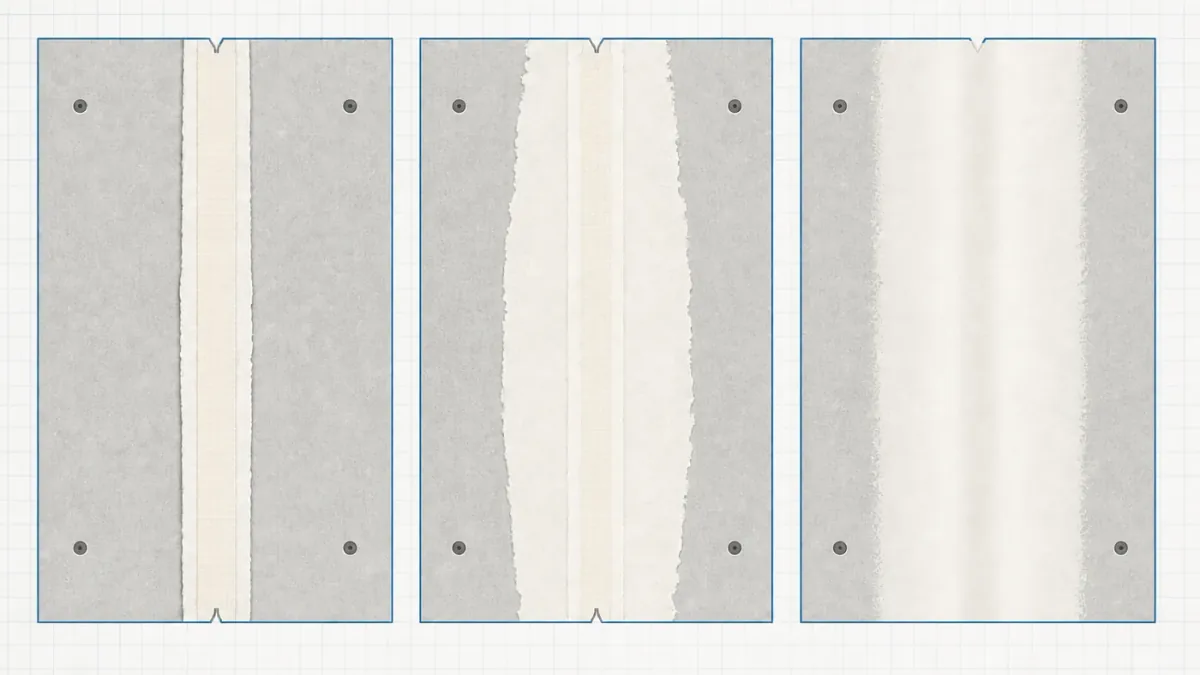
- Bed the patch with setting-type compound, worked out to about 8 in wide. Setting compound is stronger here and does not shrink much.
- Apply a second, wider coat with all-purpose compound and feather the edges out.
- A third thin coat, feathered wider again, will make the patch disappear on a lit wall.
- Sand lightly, prime, and paint the whole wall if the sheen will otherwise show a patch.
Patches show because they are proud of the wall, not because the color is wrong. Every coat should be wider and thinner than the last, and none of them should build a mound.
Larger holes: cut back to the studs
Once a hole is bigger than a hand, the repair needs real board and something solid to fasten it to. The cleanest approach is to make the hole bigger and more regular on purpose.
- Find the studs either side with a stud finder, and check for cables or pipes before cutting.
- Cut the damaged area back to a rectangle whose vertical edges land on the center of a stud each side.
- If the opening is tall, screw a horizontal backer of scrap timber behind the top and bottom edges so the new board has support all round.
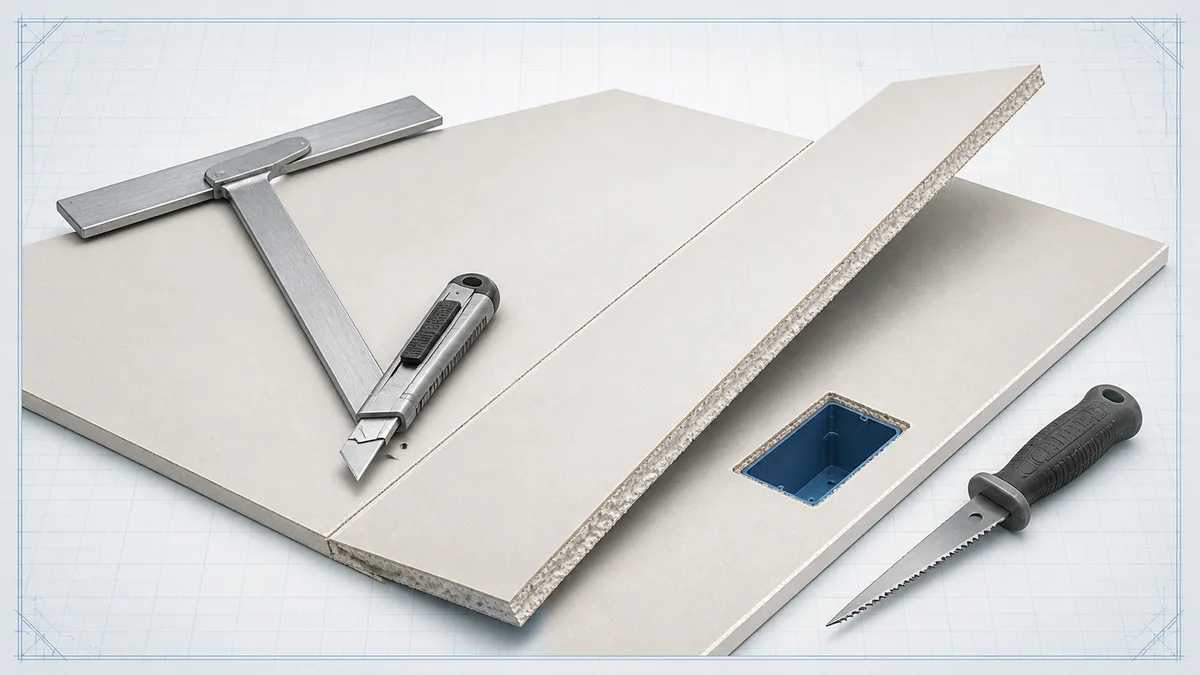
- Cut a patch of the same thickness board to fit with a small gap, and screw it to the studs and backers.
- Tape all four joints with paper tape bedded in setting compound, exactly as you would a new wall.
- Fill and finish coat, feathering wide, then sand, prime and paint.
A California or butterfly patch, where the back paper is left on as a flange, works well for medium holes in a pinch, but for anything large a screwed patch on solid framing is the repair that stays put.
Water damage, corners and recurring cracks
- Water damaged board: find and fix the leak first, then let everything dry fully. Board that is soft, stained or crumbling gets cut out, not painted over.
- Cracks that keep coming back are movement, not a filling problem. Filling them again will fail again. Look for the cause: a truss lifting seasonally, a butt joint on an opening corner, or a missing expansion detail.
- Corner bead damage: cut out the damaged section of bead, screw in a new piece, and rebuild the corner in coats.
- Ceiling stains from an old leak, once dry, need a stain-blocking primer. Water-based primer will let the stain bleed straight back through.
- Anything in a house built before 1980 that involves disturbing old surfaces: have the material tested for asbestos and lead before you sand.
One habit that makes repairs invisible: paint corner to corner, not just the patch. Even a perfect repair in the correct color will read as a rectangle if the surrounding paint has aged or has a different sheen.
Square Feet Calculator
Sizing a larger repair? Get the area and sheet count first.
Frequently asked questions
Primary references
Manufacturer and industry guidance used to check this article.
Product instructions, tested assemblies and local code take priority over general guidance.